It’s Foggy Today!
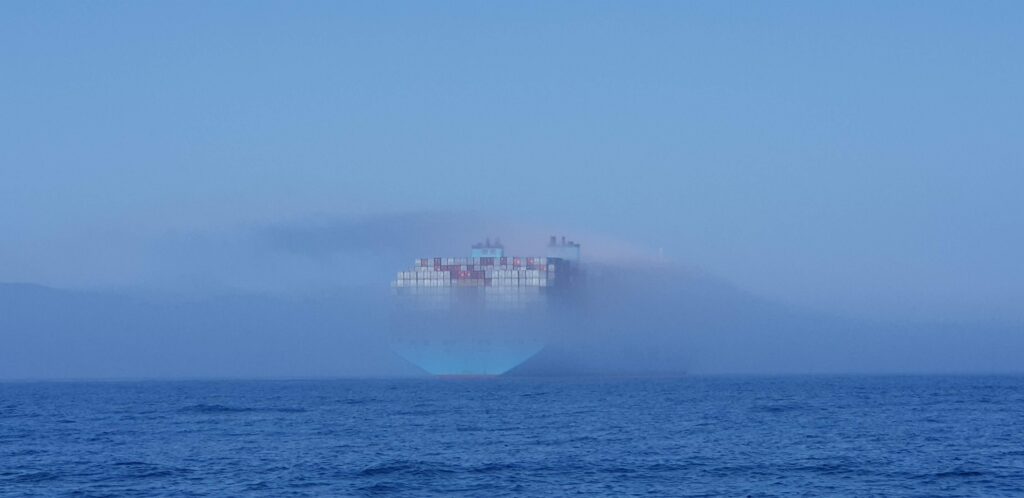
Here in Gibraltar, we quite often experience fog, although it’s usually only for short periods. But did you know that fog isn’t just fog? There are several different types, each forming under different weather conditions.
The main types of fog are:
- Advection Fog
- Radiation Fog
- Steam Fog
- Frontal Fog
- Ice Fog
- Upslope Fog
As sailors operating around Gibraltar and the UK, the two types we are most concerned with are Radiation Fog and Advection Fog.
Radiation Fog
Radiation fog generally forms overnight under clear skies with light or calm winds. It develops when the ground loses heat by radiation, cooling the moist air immediately above it to its dew point, allowing tiny water droplets to form.
This type of fog is most common from autumn through winter. It is typically a shallow ground or valley fog that forms in low-lying areas before spreading down valleys and, in coastal regions, extending out to sea for around 5 to 10 miles.
Radiation fog usually dissipates shortly after sunrise as the sun warms the ground and the surrounding air.
Advection Fog
Advection fog forms when warm, moist air moves over a colder sea or land surface. As the air is cooled from below, it reaches saturation and fog develops.
Unlike radiation fog, advection fog can form under cloudy skies and in moderate to strong winds. The cooling of the air near the surface creates a stable layer, allowing the fog to develop and persist.
Once established, advection fog can be carried considerable distances by low-level winds, moving across both the sea and the land.
Around Gibraltar, advection fog is the type most frequently encountered. It can persist for several days, significantly reducing visibility and creating challenging conditions for mariners.