Drink Driving at Sea: Think Before You Take the Helm
If you’re planning to head out on the water and take the helm of a boat, jet ski, yacht, or any other watercraft, there’s something you should know.
Whether you call it a sundowner, a quick beer, or a well-earned drink after a day’s sailing, alcohol and boating can be a dangerous combination.
Many sailors enjoy a drink after a successful day on the water—whether it’s relaxing alone or sharing a celebratory beer with the crew to say thank you. However, once you’re responsible for a vessel, alcohol can impair your judgement, reaction time, and coordination, dramatically increasing the risk of a serious accident.
The Morning After Matters
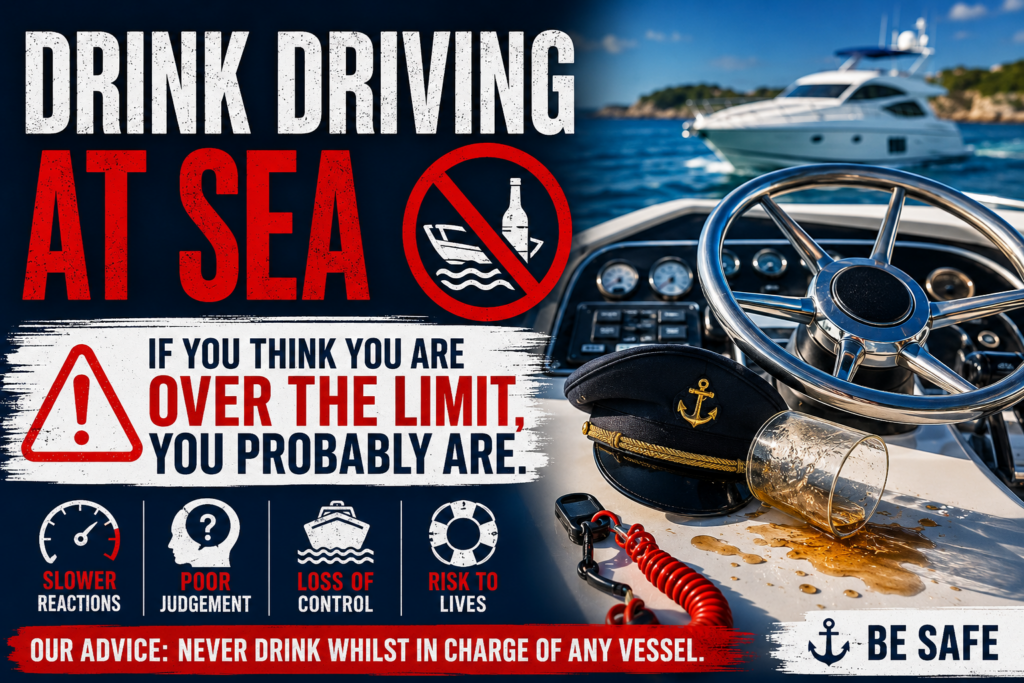
Even the day after drinking, you may still be over the legal alcohol limit.
If you think you might be over the limit, you probably are.
This isn’t a challenge—it’s about protecting lives.
Our advice is simple:
Never drink while in charge of any vessel.
Let’s look at the laws in some of the world’s most popular boating destinations.
Greece
In Greece, the standard Blood Alcohol Content (BAC) limit for operating a boat or yacht is 0.5 g/L (0.05%).
For commercial boat operators, novice skippers, and jet ski riders, a stricter limit of 0.2 g/L (0.02%) applies. Many local boat rental companies also operate a zero-tolerance (0.00%) policy for smaller, non-licensed vessels.
Penalties
The Hellenic Coast Guard strictly enforces maritime drink-driving laws. Penalties include:
- Fines ranging from €350 to more than €2,500, depending on the level of impairment and type of vessel.
- Criminal prosecution for BAC levels above 1.1 g/L, with prison sentences of up to five years.
- Suspension of boating licences for up to 10 years in serious cases.
The Hellenic Coast Guard can require a breath test at any time, including before departure, if they believe you will be operating a boat, jet ski, yacht, or other watercraft.
Spain
Spain applies the same alcohol limits to recreational boating as it does to driving a car.
The legal limit is:
- 0.5 g/L blood alcohol, or
- 0.25 mg/L breath alcohol.
Penalties start at €500 and can exceed €1,000, with criminal charges possible for BAC levels above 1.2 g/L.
Special Rules in Tourist Hotspots
In destinations such as Ibiza and Mallorca, authorities have introduced additional “Tourism of Excess” regulations. Party boats are prohibited from operating or picking up or dropping off passengers within one nautical mile of designated resort areas.
The Guardia Civil may require you to take a breath test while operating any boat, jet ski, yacht, or other watercraft.
Turkey
Turkey’s maritime drink-driving laws set the legal limit at 0.5‰ (0.05% BAC) for private recreational vessels.
For commercial vessels, the limit is 0.00% BAC.
Private Vessels
Operators of recreational and sports boats must remain below 0.5‰ BAC.
Commercial Vessels
Commercial charter boats, gulets, passenger vessels, and all professional crews are subject to a zero-alcohol policy. Both the skipper and any crew members on duty must remain completely sober.
Penalties
Exceeding the legal limit can result in:
- Heavy fines, often calculated according to the length of the vessel.
- Suspension of amateur or professional maritime licences for a minimum of six months.
United Kingdom
In the United Kingdom, operating a commercial vessel while intoxicated is a criminal offence. However, there is currently no single national drink-driving limit that applies to all recreational boaters.
Although this area of legislation remains under review, boaters can still face serious legal consequences if alcohol contributes to unsafe navigation or an accident.
Commercial Skippers
Under the Railways and Transport Safety Act 2003, commercial operators are subject to limits of:
- 80 mg of alcohol per 100 ml of blood, or
- 35 micrograms per 100 ml of breath.
Recreational Boaters
The provisions covering recreational boating have not yet been fully implemented nationwide. However, anyone operating a vessel under the influence may still face prosecution under general maritime law if their actions endanger others or result in injury or death.
Local Harbour Authorities
Some harbour authorities, including the Port of London Authority, have their own bylaws that make it an offence to navigate a vessel while impaired by alcohol or drugs. Harbourmasters also have powers to stop vessels and require breath tests.
Boat Rental Companies
Most rental operators work on a strict “good seamanship” policy. They may refuse to hand over a vessel if they believe the skipper is under the influence, and many require at least two people on board who are fit to operate the vessel.
Insurance
Remember that the skipper remains responsible for the vessel, even while at anchor, until the engine is shut down and the vessel is safely secured. Alcohol impairment may also invalidate your marine insurance if you’re involved in an accident.
Stay Safe Wherever You Sail
These are just some of the world’s most popular boating destinations. Drink-driving laws vary between countries, and it’s your responsibility to understand the regulations wherever you travel.
Always check the local laws before heading out on the water.
Our advice is straightforward:
Don’t do it.
If you think you’re over the limit, you probably are.
Be responsible. Protect your crew. Protect others. Stay safe.